Monday, March 14, 2016

Please Repeat That In English

Every veterinarian gets this from time to time. We have just finished painstakingly explaining a complex medical condition to a client and then, after a brief silence, the client says, "Please repeat that in English!".
We have failed to communicate clearly. We have used jargon or at least we have used words that didn't seem like jargon to us, but clearly seemed that way to the client.

Why does this happen? Three reasons:

1) When we are first starting in practice we sometimes use big words and convoluted explanations to demonstrate our knowledge and win the client's trust in our competence. I looked very young when I graduated in 1990. I got called Doogie Howser a lot (the reference itself tells you how long ago that was...). Consequently I tried to impress with Latin. Look, I really am a doctor! I don't do that anymore. I don't need to. Now I get called "the old guy". I'm undecided which is better...

2) We don't want to insult clients by "dumbing it down". In reality only crazy people are insulted and there is no pleasing them anyway. Most clients who prefer that you use more technical language will politely tell you so, and often be pleased that they have the opportunity to tell you so.

3) We have "The Curse of Knowledge". This is the big one and the hardest one to overcome. A Stanford University researcher conducted an experiment whereby she asked people to tap out the rhythm of a well known song, like Happy Birthday or Mary Had A Little Lamb, and then asked other people to guess what the song was based on the tapping. The tappers predicted that 50% of the time the listeners would guess correctly. In reality only 3% of the listeners did! The tappers had "The Curse of Knowledge". It was impossible for them not to hear the tune in their minds while tapping and it was almost as impossible for them to be able to imagine someone not hearing it. Once you know something it is very difficult to recreate the state of mind that exists when you do not know it.

So, veterinarians can no longer put themselves in the minds of people who don't know the difference between a colon and a duodenum, or between an antibiotic and an anti-inflammatory or, my favorite, between the abdomen and the stomach. We're not alone though. All professionals do this. Actually, all people with specialized knowledge do. Car mechanics and accountants are the worst in my experience.

What can we do about this? If we have certain regular spiels we should try them out on our unsuspecting family members or friends. And we should try to put ourselves in that unknowing frame of mind as often as possible. For my part, I am trying to learn to play the mountain dulcimer (yeah, yeah, whatever) and whenever my musical friends start talking about "the key of..." and "quarter tones" and whatnot they have The Curse of Knowledge and I feel like the drooling guy in the wool cap who delivers the fliers. This make me humble. This gives me empathy, and empathy is a key ingredient in effective communication.

I'll close with an illustrative anecdote. A few years ago an elderly lady came in with a little white fluffy dog. We'll call her Mrs. Winterbottom and the dog Priscilla. Mrs. Winterbottom was a very elegantly dressed woman with a lovely summer dress, matching shoes, matching handbag and even a matching hat. She spoke very properly and politely.
"Mrs. Winterbottom, we're going to need to run a fecal on Priscilla."
Blank look.
"I'd like to do a stool test."
Still blank.
"Um, so, do you think you can collect one of her... um... bowel movements?"
Dawning comprehension and a big smile.
"You mean bring her shit!"
Indeed.
I think I'll stick with "bowel movement".

Monday, February 29, 2016

Getting Tutored

In a straw poll veterinarians stated that their favorite The Far Side cartoon was the one where a dog being driven to the vet brags to his friend, "I'm going to the vets to get tutored!".
This is funny several ways, but the way that is relevant to this post is that it highlights the confusion around the terminology. Even well educated clients will approach the subject cautiously, "I guess it's time to get Fred... is it spayed, or neutered?".

For my lay readers, neuters are for males and spays are for females. At the risk of sounding unprofessional, a handy mnemonic is that the word neuters contains the word "nuts". Which brings me to the next area of confusion: the widespread misunderstanding of what this procedure actually entails. I'll focus on neutering and leaving spaying for another post lest I blather on too long.

So, the technical term neuter is actually orchidectomy. "So doc, you're taking out his... orchids???" Yeah, so that's why we don't use that term at all. A more descriptive term is castration. Large animal veterinarians routinely and happily call it that. The companion animal world is different however. Picture a sweet little old lady with her tiny fluffy white poodle sitting primly on her lap. He has a blue bow at the base of each ear and smells faintly of peaches. Now picture me saying, "Yes, Mrs. Butterworth, it's time to castrate Baby." Moreover, there are people who think that castration means cutting the penis off. Yikes! Yes, there are such people who believe such things. And no, we never do that (except in very special circumstances in cats who have frequent urinary obstructions, but I digress).

What do we do then? We do this: we surgically remove the testicles (remember? neuters contains nuts?). Sometimes I'm asked why we don't just perform a vasectomy instead. This is because reproductive control is only one of the reasons to neuter. In many cases we would also like to remove the ability to produce testosterone in order to eliminate the risk of testicular cancers and chronic prostate infections later in life, as well as to help curb marking behaviour, roaming and male-on-male aggression. You'll note that I wrote "help curb". Too often people use neutering as a substitute for training. It is not. 

Now I'm going to wade into a controversial area. Virtually all cats are neutered. The exceptions involve people who have had their own olfactory nerves removed. However, not all dogs are neutered, at least not at the traditional six months of age, and - here is the controversial bit - this might be ok. There is evidence now that breeds of dogs that are prone to cruciate knee ligament ruptures (typically large breeds) may be at increased risk if they are neutered before their bodies are fully mature. This might mean waiting until 18 or 24 months for some breeds. There may be other risks associated with early neutering in some dogs as well. This is a complex area of ongoing research, so please (please please) speak to your veterinarian first before making any decisions based on what you have read here or elsewhere on the internet. A lot of what we do has evolved from boilerplate "one size fits all" recommendations to a discussion of options tailored to the risk/benefit ratio specific to your pet. And this is a good thing. A confusing thing, but a good thing.
I guess that was more like toe-dipping rather than wading...

Finally, I'm going to leave you with this:
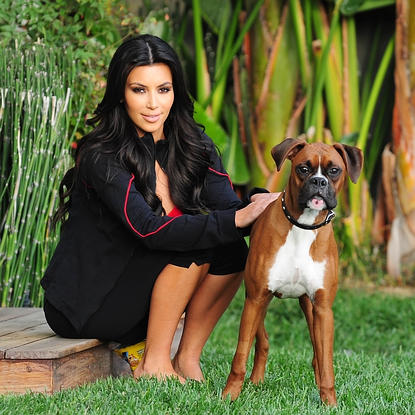
This 100% for real. And endorsed, it seems, by Kim Kardashian. Yes, finally there is help for the owner who wants to neuter their dog, but has an unhealthy attachment to the appearance of his scrotum. Unfortunately it's not the help these people actually need.

Comes with a nifty bumper sticker though!


Thursday, February 18, 2016

The Ineffable Weirdness of Dentistry


A routine part of small animal practice is recommending dental work and then having the pet owner react as if you have just recommended Spanish guitar lessons for their dog or a set of encyclopedias for their cat. Some people view veterinary dentistry as evidence that we've gone too far in treating pets like people. These people (thankfully increasingly a minority, but a very annoying one) put it in the same category as pink leather jackets for chihuahuas and spa days for cats.

This can even be true when you show the client gum lesions that are exuding pus. Guaranteed if you showed them lesions exuding pus anywhere else on the body they would be horrified. They would expect immediate curative action. But not so for the teeth.

Why is this?

In part it is because the teeth are generally not visible. That being said, I would like to note that sometimes the same people will then go on to show me a minuscule lump somewhere deep in the dog's groin or be genuinely concerned when blood tests reveal a more minor issue in an internal organ that is definitely not visible.

Another factor is that animals do not show dental pain. This sometimes results in the reverse problem wherein the client will absolutely insist the cat isn't eating because his teeth are bad. There are 968 common reasons for a cat not to eat and that is not one of them. It is a very uncommon reason for them not to eat. But the pain question is also only a partial answer as many other conditions that are not painful elicit far more interest from the dental skeptical clients.

So then, what is my theory?

My theory is that we must blame the weird history of the human dental profession. Objectively speaking teeth are part of your body. Actually, subjectively too. Teeth are part of your body: objectively, subjectively, factually. Agreed? Why then is it the only part of your body to have an entirely separate profession devoted to its care? It turns out to merely be an accident of history. We could have just as logically ended up with a separate profession focused on our fingers and toes. "I'm off to the digitist dear!"

Before the 20th century there was a division between physicians who examined sick people and prescribed primarily quack remedies and "barber surgeons" who used their sharp razors and steady hands to perform surgeries ranging from lancing boils to amputating limbs as a sideline between hair appointments. Some also had a set of pliers handy to pull teeth (as did some blacksmiths). That was the sum total of historical dentistry - yanking festering molars. Carpenters and other tradesmen made false teeth. As regulations began to gel the more ambitious of the razor wielding barber surgeons craved the prestige the physicians enjoyed and those professions gradually merged, more or less accidentally leaving tooth pulling behind and unregulated. Later on the medical colleges who began to shut down all manner of other trades that were "practicing medicine without a license" (midwives come to mind) ignored the tooth pullers because they didn't seem to be a threat and, some will darkly say, because they were of similar social backgrounds.

This has left us with a situation where in Canada medicare will pay to operate on your infected toe, but not to operate on your infected tooth. A situation where you have two incompatible sets of records regarding your health. A situation where some people see their teeth as being divorced from the big picture of their health. Arbitrary and weird. Dentistry is weird.

And for us poor veterinarians who have successfully kept the entire body of our patients under one umbrella, it is a situation where some pet owners have a different mental box for teeth than for the rest of Fido/Fluffy's body.

p.s. My dentist is great and not all that weird. I just think if he were an MD dental specialist my life as a veterinarian would be simpler.

Monday, February 8, 2016

When Darkness Overwhelms

This post is going to be a departure from my usual lighthearted (or lame attempt at lighthearted) tone. This post is going to be about suicide in the veterinary profession. Statistics are not available for Canada, but in Britain two separate studies found the suicide rate among veterinarians to be four times that of the general population.  I personally knew two colleagues here in Manitoba who took their own lives, and in 2014 a prominent and very well liked behaviour specialist killed herself, drawing some media attention to this little known aspect of the profession.

To the casual outside observer this will be unexpected and possibly even slightly bizarre news. Aren't veterinarians generally well respected? Isn't it a secure, interesting and rewarding career? Isn't it a dream job for so many people? Isn't it wonderful to heal innocent animals and get paid to play with fluffy kittens? All of that is true. Except the part about the fluffy kittens. Why then does darkness overwhelm so many of my colleagues? There are three significant reasons.

The first reason is that veterinary medicine attracts a disproportionate number of idealistic, introspective and sensitive people. Sensitive to the point of neurosis. This is true of all of the health professions, but it is more so in veterinary medicine. Some of these introspective people are more comfortable around animals than around other people. They do not fully understand that it is actually a people job that happens to involve animals rather than the other way around. Grappling with this reality can be very problematic for some. Add to this the fact that competition to get into veterinary college is extremely high and success favours perfectionists who can produce high marks. Perfectionism and idealism are fated to be brutally ground down by the chaos of reality in practice. And then their innate sensitivity lays them wide open to the second reason.

The second reason is the inherent and often surprising multi-factorial stress of the job. Of immediate relevance to sensitive people is the fact that a veterinarian is at times marinated in death and grief. There are weeks, many weeks in fact, where I perform one or more euthanasias each day. Sobbing, crying, wailing, grief-stricken people, some of whom we've known for many years, are a routine part of our day. And for those of you who think this is simply a question of overwrought crazy cat ladies or frou-frou poodle people who too much resemble their dogs, I have two things to say to you. The first is that if you have not experienced a deep bond with an animal then you are missing out on a key human experience, one shared by people from all walks of life, all backgrounds, all levels of intellect. It is one of the richest threads we weave. The second is that you have no more right to judge this than a blind man has to judge a photography exhibit. Simply trust me that these are normal people with legitimate and intensely felt grief.  Additionally, a veterinarian is expected to be competent across a range of species and a range of disciplines from dentistry to radiology to dermatology to... you name it, wedging the door wide open to so many opportunities to fail. And remember: "sensitive". Mix sensitive and failure and see what happens. And I haven't even discussed the financial stress of trying to be affordable to clients yet still be able to service sometimes enormous debt burdens and meet payroll etc.. Or the stress of being a manager when you went to school to be a vet, not a manager. Or the angry clients. Or the angry spouse because you're stuck late again.

The third reason is that we know how easy it is. How easy it is to die. Those daily euthanasias are consistently peaceful, painless, quick and reliable. One hundred percent reliable. We know the dose. We know the delivery methods. We have the drug right there. Can you see now why it happens too much?

What can you, the reader, do? You can't do much about the first or third reason, but you can do something about the second. If your friend or family member is a veterinarian, do not trivialize their stress. Understand that James Herriot is a crock and that the real job is far more complex and serious than you imagine. Offer to listen with an open heart.

And what about me? Well, fortunately I had a "happy optimist" chip deeply implanted at birth. The zombie apocalypse could roll into town and I would say, "Cool, this will make for some excellent photos!" And, "Maybe brains are better with a bit of smoked paprika?" I have painted a bleak picture when in fact most veterinarians are fine, even better than fine, but burn-out is very real and for a small tragic minority, suicide is very real too.

This post is for Terry and Craig and Sophia.

Monday, January 25, 2016

Chomp Chomp


Many people assume that veterinarians get bitten a lot. In the ultrasound referral part of my practice where I don't know the patients I often get comments accompanied by a wry chuckle along the lines of, "It's a good thing you're seeing 'Killer' today, 'Precious' would take your arm off!" (This also illustrates a general principle that there is an inverse correlation between the name of the patient and its behaviour.) I'll sometimes catch people mentally counting my ten intact fingers. The truth is that I've only been badly bitten twice. I've been in practice 25 years and see somewhere in the neighborhood of a couple thousand patients a year. These are much better odds than you probably guessed.

That being said, the exceptions form an indelible mental rogue's gallery. Every veterinarian has one of these.  At the top of mine is Oscar Westenheimer. Oscar was a little chihuahua cross (of course he was) who resembled a baked potato with four toothpicks stuck in for legs and an angry walnut for a head. Oscar was in for a nail trim. We knew that he had anger issues so we were careful to muzzle him. The nail trim was done up on a table and afterwards Oscar was set back on the floor and then the muzzle was taken off. Have you guys been to Sea World? Or at least seen a video clip of when the trainer stands on a high platform and holds a fish out for Shamu who leaps cleanly out of the water to get the fish? Well, Oscar was Shamu, I was the inadvertent trainer and my right index finger was the fish. How that little baked potato could catch so much air astonishes me to this day, but as soon as the muzzle was off, up he came. Sailing through the air, fangs sharpened and then chomp, right through the fingernail. Off it came. This hurt. Fortunately the client wasn't there so I was able to verbally express myself in an honest and uncensored fashion.

The second time was more surprising. Despite the name I generally trusted Peaches so I thought nothing of examining her mouth. I carefully opened her mouth, holding the upper jaw steady with my left hand while gently levering the lower jaw down with that poor right index finger. Chomp. I still don't know why. She always wondered what it would be like? I didn't wash my hands thoroughly after lunch? Early onset doggie dementia?  

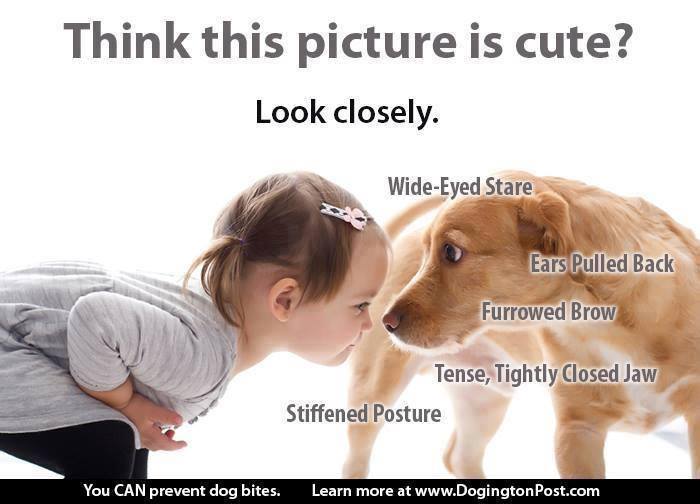
This is why we get bitten so rarely (relatively). The great majority of dogs will warn you using body language. I was probably too intent on chatting with the owner and on Peaches' tartar to tune into her warnings.

Occasionally though you will encounter a sociopathic dog. A dog who does not conform to the norms of dog communication. A dog who is going to bite you just for the heck of it. So although it was not a "bad bite" (i.e. no wound dressings and antibiotics required), Daffodil deserves honorable mention in my rogue's gallery. She was a Brazilian German shepherd. Very expensive, very fancy. She sat perfectly beside the owner in the waiting room, just as a very expensive, very fancy dog is expected to. The owner and I were talking and I was leaning on the reception counter, perhaps as far away from them as the distance across the average living room. Daffodil looked very relaxed and at ease. And then, before I could flinch or even blink, she was across the room with her jaw clamped on my thigh. Half a second later she was back beside the owner, sitting primly again, as if nothing had happened. The owner seemed unfazed. I, however, was thoroughly fazed and excused myself to go take my pants off in the washroom. She hadn't broken the skin, but had given me temporary red dental chart tattoo.  

What about cats? I've been lucky. Cats also generally give plenty of warning. A cat that is going to bite you radiates tension like a force field. I've also become very adept at carrying them gingerly like unexploded ordinance and handing them over to my staff, who are almost magical in their ability to manage the exploding cat. Usually. I do get scratched with tiresome regularity though. Once the nails went right through my lab coat and through my shirt, raking me across the chest and giving me a faintly piratical scar that I bear to this day.

But Oscar, oh Oscar, when I am one hundred years old and drooling and cannot remember that shoes go on my feet and not on my hands I will remember you.

Monday, January 18, 2016

The Purr

It's time for a cat story. Just a little one. A little one about one of this mysterious species' most asked about mysteries: the purr.

Little gladdens the heart of a veterinarian like a healthy kitten check-up, especially if it is after a long series of messy, complex, sad, smelly or chaotic appointments (in other words - a normal day). You walk into the room, introduce yourself and then proceed to stroke a fluffy happy kitten while discussing various easy kitten care subjects with the happy owners. I imagine that when some of you picture the life of the small animal veterinarian you picture something like this. Well, it represents somewhere between 2 to 3% of what we do (see reference to sad, messy, complex etc. above), but it is a lovely 2 to 3%. After the stroking and chatting you begin to examine said kitten. This is also pleasant as it hasn't learned to hate you yet. Then you place the stethoscope on the kitten's chest and hear.... amplified purring. This may sound cute, but it is annoying as you really do want to hear the heart and lungs. There are a few different tricks to get them to stop,  but my favorite is to carry the kitten with the stethoscope still in place over to the sink and then turn on the tap (slowly and carefully, lest you freak the kitten out and the visit shifts into the messy, complex, chaotic column). This almost always surprises them enough to make them stop purring for a few seconds.

The owners typically chuckle about this and then sometimes ask, "So why do they purr?"
My answer: "We don't know."
I was tempted to end the post there, just for dramatic effect, but that would be irritatingly glib. And it is also disingenuous as although we don't know for sure, we do have some decent guesses now.

First of all, what actually is a purr? There used to be all kinds of wacky theories, but the answer ends up being the most obvious one: the purr comes from a vibration in the larynx (voice box) controlled by the rhythmic pulses of a neural oscillator in the brain. Ok, the "neural oscillator" part may not be that obvious, but you might have guessed at the voice box. Cats with laryngeal paralysis can't purr. Some of you may have a cat that doesn't seem to purr. This does not mean that they have laryngeal paralysis as that is quite rare, but rather the thinking is that some purr so quietly that you cannot hear it. These cats will still have a vibrating larynx, but you would have to know exactly where to feel, how to feel and, most importantly, when to feel in order to detect this. The number who truly never purr is likely really very small, like people who truly never smile.

Which brings me to the main question, the why. Is it like smiling? The answer that is emerging from the fray of competing theories is that purring does resemble smiling in that it is used for social bonding, especially between kittens and their mothers (and cats and their owners with can openers). Moreover, like smiling, it results in endorphins being released. This also explains why cats don't just purr when they're happy, but also when they are injured or in pain. The endorphins provide natural internal pain relief. (Does this means you should smile when someone punches you in the gut? Of course it does.) Even cooler, to my mind, is the well supported suggestion that the vibrations from the 25 - 50 Hz frequency range of a cats' purr actually encourage tissue healing. The time may not be far off when we are told to strap a cat to our knee when we tear our ACL. Obviously some practicalities would have to be worked out first.

So, is there any downside to purring? Potentially yes:
https://www.youtube.com/watch?v=akcALE_R7-o


Wednesday, January 6, 2016

The Ballad of the Prairie Flea

I have listened to my restless readers who have been quietly grumbling, "Ostriches, seeing eye dogs, killer rabbits, Christmas gerbils... that's all well and good, but when are you finally going to tell us something useful Schott? When??" When is now. My intent is to balance the blog between quirky animal stories, insights into the experience of being a veterinarian and actual pet health information.

Which brings me to fleas.

I'm willing to wager that if you were visiting your psychiatrist and he said "What's the first word that comes to mind when I say 'dog'?", a reasonable percentage of you would say "fleas" (those of you who didn't say "bone", which is worthy of a post on its own). Most cartoon dogs have fleas and children tune ukuleles to "my dog has fleas". An itchy dog is presumed by many to have fleas. But not so fast. Most of you reading this live on the Canadian Prairies, and woe betide the poor Prairie flea. You see, fleas love heat and fleas love humidity. Consequently there are many many many fleas in Tallahassee and no fleas at all in Tuktoyuktuk. For better or worse Winnipeg, and the rest of the Prairies, is a lot more like Tuktoyuktuk than Tallahassee. Next time you're in Florida pay attention to how many veterinary clinics you see. A lot, right? Fleas. It's all because of fleas.

Despite this ground truth the culture still teaches people to assume that an itchy dog or cat has fleas. It used to be the number one myth I would bust. We would see the occasional case of fleas, perhaps two or three a year, versus the literally hundreds and hundreds of dogs and cats itchy because of allergies (yes, allergies - extremely common). I would marvel at this tough or perhaps misguided little Prairie flea and wonder how she got here and what her plan for the winter was. A year ago this would have been a quick and simple post to write - your pet does not have fleas. Done. This last fall however... something has changed. They are still very rare, but we had perhaps eight or ten cases, quadruple the average. We're not becoming Tallahassee any time soon, but we seem to be inching a little closer. Add fleas to your running list of climate change consequences. Al Gore didn't warn us about this.


And how do you know your pet has fleas? Ideally you see the mighty flea itself, but they are tiny and astonishingly quick and they are only on the animal to feed, the rest of the time they are - gulp - out and about in your house. Instead we rely on a gross flea fact. Fleas drink blood and then poop out the digested blood. Consequently flea poop looks like little black dirt particles in your pet's fur. Take one of these particles, place it on a white sheet of paper, wet it slightly and then streak it with your finger. If it streaks reddish brown, like the "Indian Red" in the old Laurentian pencil crayons, then you, my friend, have fleas in your house and it is time for you to panic. No, I'm kidding, you should never panic, but you should be very slightly grossed out. (Note: cats may groom the flea dirt off, complicating matters somewhat.)

I won't go into treatment in any detail except to say, perhaps predictably, that you should talk to your veterinarian as it is a bit complicated. However I will say a word about flea collars. That word is "useless". I have had clients come in and declare that the flea collar works well because Bozo doesn't have any fleas. This is akin to the man wearing the tinfoil hat declaring that it's working because aliens have not been able to zap him with mind control beams. The Prairie flea may have a little more swagger these days, but your pet would still have to be extraordinarily unlucky to encounter one.